


Malta's 2027 Budget: Higher fees and fewer benefits for non-EU residents spark criticism

From January 2027, third-country nationals without long-term resident status will lose access to free public transport and several other benefits, while foreign workers and employers face higher administrative charges. The measures have drawn criticism from migrant organisations, human rights NGOs and business representatives, while the government maintains that the changes are justified.

Malta's 2027 Budget, presented by Finance Minister Clyde Caruana on Monday, 26 October, introduces a series of measures affecting third-country nationals (TCNs), including higher work-permit fees, new charges for certain drivers and restrictions on access to public services.
The measures, most of which are scheduled to take effect on 1 January 2027, have prompted debate about the treatment of foreign residents who contribute to Malta's economy through employment, taxation and social security payments.
The changes form part of the government's wider efforts to address infrastructure pressures, population growth and reliance on foreign labour.
What changes from January 2027?
The Budget introduces several financial and administrative changes. The exemptions are not identical across all measures.
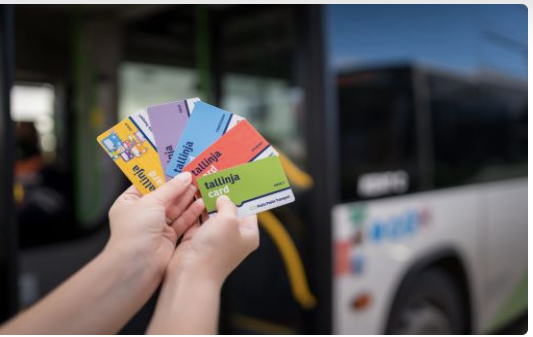
Public transport: From 1 January 2027, free public transport will be restricted to Maltese and Gozitan nationals, EU citizens residing in Malta and people holding long-term resident status. TCNs without that status will have to pay approximately €33 per month for public transport, equivalent to €396 annually.
Free childcare: New applicants who are TCNs without qualifying long-term resident status will no longer be eligible for government-funded free childcare. The restriction will not affect children already enrolled in the scheme, who will continue to benefit until they reach the end of their eligibility.
Work-permit application fees: The fee for bringing a new TCN worker to Malta will increase from €600 to €800. An additional annual €400 infrastructure contribution will apply to new applications and residence-permit renewals, bringing the combined charges for a new application to €1,200. Minors are exempt from the €400 contribution. Fees for several other permits issued by Identità are also expected to increase.
Driving licences: A new administrative charge of €83 per month, equivalent to €996 annually, will apply to certain category B and B1 driving licences issued or renewed from 1 January 2027. Exemptions include EU and European Economic Area citizens, long-term residents and their spouses, citizens of the United Kingdom, Australia and the United Arab Emirates, and residence-permit holders employed specifically as drivers.
Non-EU licence holders may drive in Malta for up to 12 months from their entry into the country. Leaving and re-entering Malta will not restart this period. For existing residence-permit holders, the period will be calculated from their last entry before 1 January 2027.
Atypical-hours benefit: From 1 January, the €150 payment for eligible workers employed during atypical hours will be restricted to Maltese and Gozitan nationals, resident EU citizens and long-term residents. Other TCNs will no longer qualify.
According to Finance Minister Caruana, the revised work-permit fees are expected to generate approximately €80 million, while the government has also referred to an estimated €46 million fiscal impact associated with measures affecting TCNs.
Government defends the changes
Prime Minister Robert Abela defended the measures following the Budget announcement, rejecting claims that they discriminate against foreign workers.
He rejected the assumption that all TCNs are low-income workers, noting that some foreign nationals employed in Malta are highly qualified professionals earning substantial salaries.
The Prime Minister maintained that non-EU workers would continue to benefit from public healthcare and government subsidies on electricity and fuel.
The government has presented the changes within a broader policy discussion about managing population growth, infrastructure demand and the country's economic dependence on imported labour.
Human rights organisations denounce discriminatory treatment
Several civil society organisations have criticised the distinction introduced between residents according to nationality and immigration status. In a joint statement, Moviment Graffitti, Rota, Friends of the Earth Malta and Solidarjetà described the withdrawal of free public transport for TCNs as institutionalised discrimination.
Human rights organisation aditus foundation criticised the Budget, calling it "Go back to your country" budget, and announcing possible legal actions.
Concerns were additionally raised by the Interdiocesan Commission for the Promotion of Integral Human Development, which warned about the potential consequences for human dignity, families and social cohesion.
TCN Alliance calls for collective action
The TCN Alliance was among the organisations to respond strongly to the announcements.
In an interview given to Lovin Malta, its representative Patricia Graham described the Budget as a slap in the face to foreign workers already struggling with the rising cost of living.
The Alliance highlighted the contribution of TCNs to essential sectors, including hospitality and healthcare. It called on the government to reconsider the measures and announced a green-ribbon awareness campaign from 16 to 20 November under the message “TCNs Deserve Respect!”
Businesses and trade unions raise economic concerns
The measures have also prompted criticism from business organisations concerned about the impact on employers and Malta's labour market.
The Malta Chamber of Commerce warned that higher work-permit fees could increase the costs of recruiting foreign workers, potentially creating additional pressure on businesses already dependent on international recruitment.
The Malta Chamber of SMEs and the Childcare Centres Providers Association criticised the restriction on free childcare. According to their joint statement, approximately one-quarter of children attending childcare centres are children of third-country nationals.
They warned that withdrawing eligibility for new TCN families could affect parents' ability to remain in employment and create difficulties for businesses employing workers with young children.
The General Workers' Union indicated that discussions could take place with recruitment companies regarding the possibility of employers covering some of the new transport costs.
TCN residents react to the financial implications
The debate has reached social media, where foreign residents and business owners have questioned the financial consequences of the announcements.
In a Facebook post reported by Times of Malta, a TCN family with two working parents questioned whether continuing to live in Malta would remain financially sustainable.
The family described monthly expenses that could reach €2,600, including accommodation, food, utility bills and permit-related costs.
In another publicly reported Facebook reaction, restaurant owner Osman questioned why foreign residents who invest in businesses, employ workers and pay taxes should face additional charges.
“We are not numbers on a spreadsheet. We are human beings,” he wrote. However, not all public reactions opposed the changes. Business owner Sue Caruana argued that access to certain state benefits should be earned progressively through residence and contribution rather than granted immediately upon arrival.
These contrasting reactions illustrate differing views about the relationship between residence, economic contribution and entitlement to public services.
Integration and the future of foreign workers in Malta
The Budget has reopened a wider debate about Malta's relationship with the foreign workforce on which several economic sectors depend. TCNs are employed across hospitality, construction, healthcare, care services, retail and other industries. Many live in Malta under employment-linked residence permits, contribute through taxation and social security payments, and participate in local communities.
For the government, the changes are part of a broader effort to manage economic and infrastructure pressures while revising access to certain public benefits.
For critics, the measures raise questions about equal treatment and whether Malta can promote integration while restricting access to services for some of the people who live and work in the country.
Beyond the additional charges, the Budget raises a broader question about the place of third-country nationals in Maltese society: how should access to public services be determined for people who contribute to the economy but hold different residence statuses?


Comments